Before you fall in love with the idea of a talking, toddler-smart bird, let’s talk numbers — because the sticker price is genuinely just the beginning. African Greys are one of the most expensive common pet birds in the world, and the range you’ll actually pay depends heavily on where you live, which subspecies you choose, and how the bird was raised.
This guide breaks down real 2026 pricing by country, what actually drives the price up or down, and the red flags that separate a reputable breeder from a bird mill.
Table of Contents

Congo vs. Timneh: Know What You’re Buying First
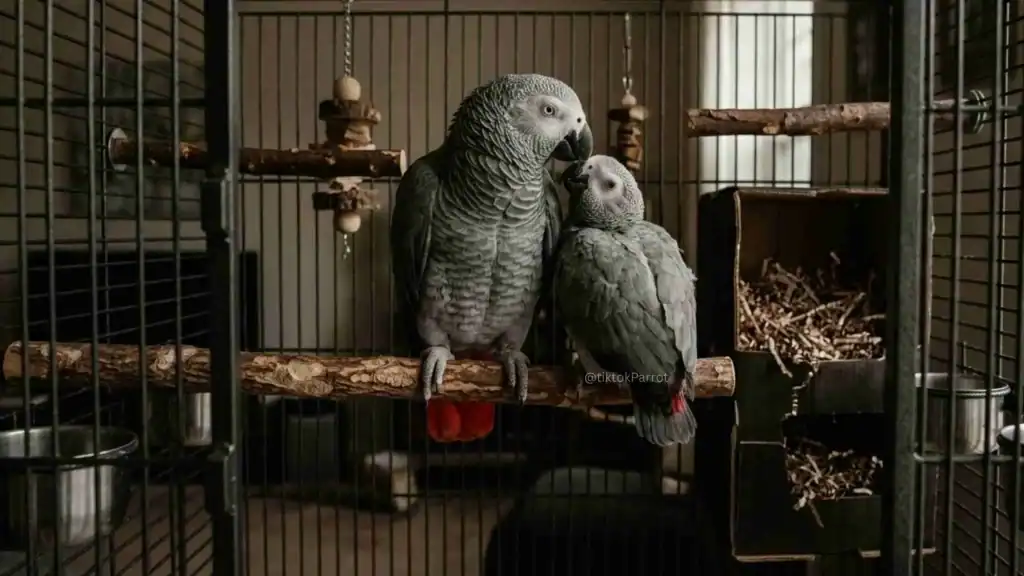
Most people don’t realize there are two distinct types of African Grey. The Congo African Grey is the more common of the two, ranging from a medium to light grey with a solid black beak and a bright scarlet tail. The Timneh African Grey is smaller, a darker charcoal grey, with a distinctive pinkish-horn colored upper beak and a duller, maroon-toned tail. Both originate from different regions of Africa, and Timnehs are generally the rarer — and slightly pricier — of the two.
Knowing which subspecies you’re looking at matters before you even start comparing prices, since sellers don’t always label it clearly.
How Much Does an African Grey Cost in 2026?
Pricing varies widely by region, breeder reputation, and whether the bird is hand-raised and already socialized. Here’s a current snapshot:
- United States: roughly $1,000–$6,000, with exceptional, fully trained, or rare-colored birds occasionally exceeding that
- Canada: approximately CA$1,500–CA$4,000
- United Kingdom: approximately £1,000–£2,000
- Australia: approximately A$3,000–A$6,000
- UAE / Gulf region: approximately 2,000–4,000 AED (around $545–$1,090 USD)
- India: approximately ₹50,000–₹100,000 (around $600–$1,200 USD)
- Pakistan: approximately ₨80,000–₨250,000 (around $285–$890 USD)
- Philippines: approximately ₱10,000–₱50,000 (around $180–$880 USD)
- Europe (general): approximately €800–€2,500
These figures shift with currency fluctuations, local demand, and import regulations, so treat them as a starting reference rather than a fixed quote — always confirm current pricing directly with breeders in your region.
My Mitthu (TiktokParrot) is a Congo Grey Parrot, in the below screenshot I can show you the clear difference between Timneh & Congo grey parrot;

Why Does the Price Vary So Much Between Countries?
Most African Greys sold internationally are bred domestically rather than imported directly from the wild, since international wild trade is illegal. Even so, breeding stock, permits, and local demand differ enormously by country, which is why the same bird can cost triple in one market compared to another.
Countries closer to the species’ native range in West and Central Africa, along with regions with looser import restrictions, tend to see lower prices, while countries with stricter CITES enforcement and higher demand — like the US, UK, and Australia — trend higher.
What Actually Drives the Price Up or Down
- Age: Weaned, independent young birds typically command the highest prices, since they’re past the labor-intensive hand-feeding stage but still easy to bond with. Wild-caught adults, where legally sold, are usually cheaper but far harder to tame.
- Genetics and lineage: DNA-tested, well-documented bloodlines cost more, particularly from breeders who screen for hereditary conditions.
- Subspecies: Timneh Greys are less common than Congos and are often priced slightly higher as a result.
- Gender: Prices are fairly similar between males and females, though breeders sometimes price proven females slightly higher for their breeding potential. You can typically tell them apart by tail feather shade once mature.
- Breeder reputation: Established, well-reviewed breeders charge more — and are worth it, since it usually reflects proper health screening and early socialization.
- Appearance: Unusual, unblemished, or rare coloring (like an atypical pink or reddish tone) can significantly raise the asking price.
How Much Do African Grey Eggs Cost?
Fertile African Grey eggs typically sell for $30–$75, considerably cheaper than a fully grown bird — but that price reflects genuine risk, not a bargain. Hatch rates are unpredictable even with a “guaranteed fertile” claim, incubation requires specialized equipment, and a hatched chick needs intensive round-the-clock hand-feeding.
In many places, buying eggs from unverified sources is also legally murky. This route is realistically only appropriate for experienced breeders, not first-time owners.
What About Ongoing Costs?
The purchase price is only step one — African Greys come with decades of recurring expenses for food, a properly sized cage, toys, and veterinary care, and those add up to a meaningful annual figure. Rather than duplicate that breakdown here,
I’ve laid out the full month-by-month and year-by-year cost picture — food, insurance, emergency vet visits, and more — in African Grey Parrot Price Guide: Your Complete Ownership Cost, which is worth reading alongside this one before you commit.
It’s also worth remembering the bigger-picture math: a dog typically lives around 15 years, while a well-cared-for African Grey can live 50 or more — meaning the total lifetime cost calculation looks very different once you factor in decades, not years.
Before You Buy: Questions to Ask Every Seller
- Is the parrot healthy? Ask for a written health background or vet declaration.
- Has the seller had any behavioral issues with this bird? A sudden low price sometimes signals an underlying problem.
- What’s the parrot’s actual age, and can they prove it?
- Do they have the appropriate paperwork and CITES documentation for your country?
For a deeper walkthrough of vetting sellers and preparing your home, see tips for buying an African Grey parrot.
Legal Requirements and Warning Signs
African Greys are listed as an endangered species under CITES Appendix I, and international trade in wild-caught birds is illegal. Only buy from breeders who can provide the correct paperwork for your country, and check that they’re affiliated with a recognized parrot breeding association. A quick search of the seller’s name and reviews before you commit can save you from a costly mistake.
Watch for these red flags:
- The seller won’t let you see or handle the bird before purchase
- The price is dramatically higher or lower than the regional norm with no clear explanation
- A suspiciously low price, which often points to an unregulated bird mill or an illegally wild-caught bird
- Genetic or lineage claims with no DNA documentation to back them up
Should You Buy or Adopt?
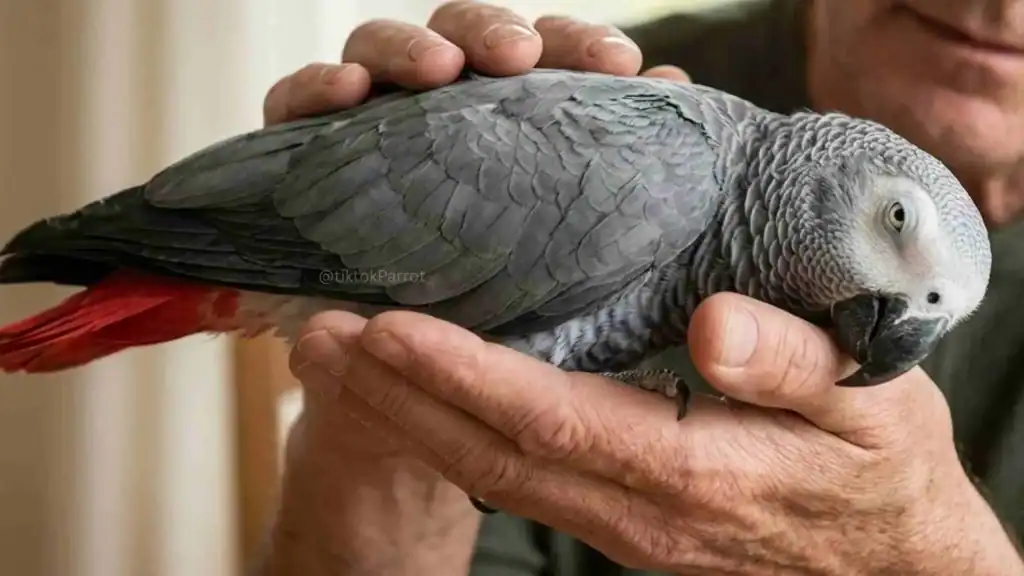
Given the decades-long commitment and the real financial cost involved, adoption is worth serious consideration before you buy. Thousands of African Greys are surrendered every year — often not because the bird did anything wrong, but because an owner underestimated the cost, noise, or time commitment.
An adopted Grey, sometimes available for a fraction of breeder pricing, gets a second chance at a stable home, and you get a bird that may already be partially socialized.
Frequently Asked Questions
How much does an African Grey parrot cost on average?
In the US, expect roughly $1,000–$6,000 depending on age, subspecies, and breeder reputation, with pricing varying significantly by country.
Is a Timneh or Congo African Grey more expensive?
Timneh African Greys are generally slightly more expensive than Congos due to their comparative rarity, though both vary widely by breeder and region.
Are African Grey eggs cheaper than buying a grown bird?
Yes, typically $30–$75, but this comes with a high risk of failed hatching and is not recommended for first-time owners.
Why are African Grey parrots so expensive compared to other parrots?
Their long lifespan, high intelligence, endangered status, and the cost of legal, ethical breeding all contribute to a higher price point than most other pet parrot species.
Final Thoughts
The number on a breeder’s price tag is really just the entry fee for a multi-decade relationship with one of the most intelligent animals you’ll ever share a home with. Know your subspecies, know your region’s typical pricing, ask the right questions, and — seriously — consider adoption before you buy. Whichever path you choose, go in with your eyes open about both the financial and time commitment ahead.
If this blog post has helped you, please share it with your family and friends who might also find it helpful. If you love African Greys, join our community of Grey owners! You can meet other owners, share tips and learn from each other.
Check out my eBook “The Grey Area”
Stay safe and much love!


Hey there! 🐾 Looking for top-notch pet supplies or anything on Amazon?
Support our site by shopping on Amazon through our this referral link, it will not cost you extra!
Your purchases on Amazon can help us continue providing valuable content.
Thank you for your support! 🛍️
- Bacterial Respiratory Infections in African Grey Parrots: Symptoms and Treatment
- Why Do African Greys Chew Their Nails? Causes and What to Do About It
- How Can You Tell If an African Grey Is Depressed?
- How Long Do Baby African Greys Stay With Their Mother?
- Symptoms of Salmonella in Parrots: What Every Owner Should Know