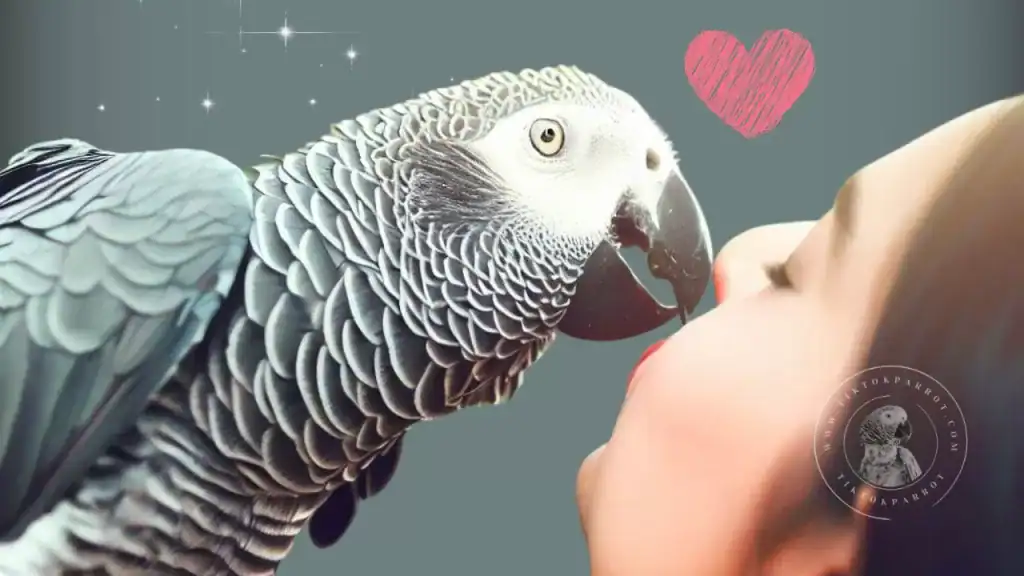
It’s the question almost every new owner eventually asks themselves at 2 a.m. while their Grey sleeps on a nearby perch: does this bird actually love me back, or am I just the reliable source of snacks and company? Given how much time, patience, and money goes into an African Grey, it’s a fair thing to wonder — and the honest answer is more interesting than a simple yes or no.
Table of Contents
What “Love” Actually Looks Like in a Parrot’s Brain
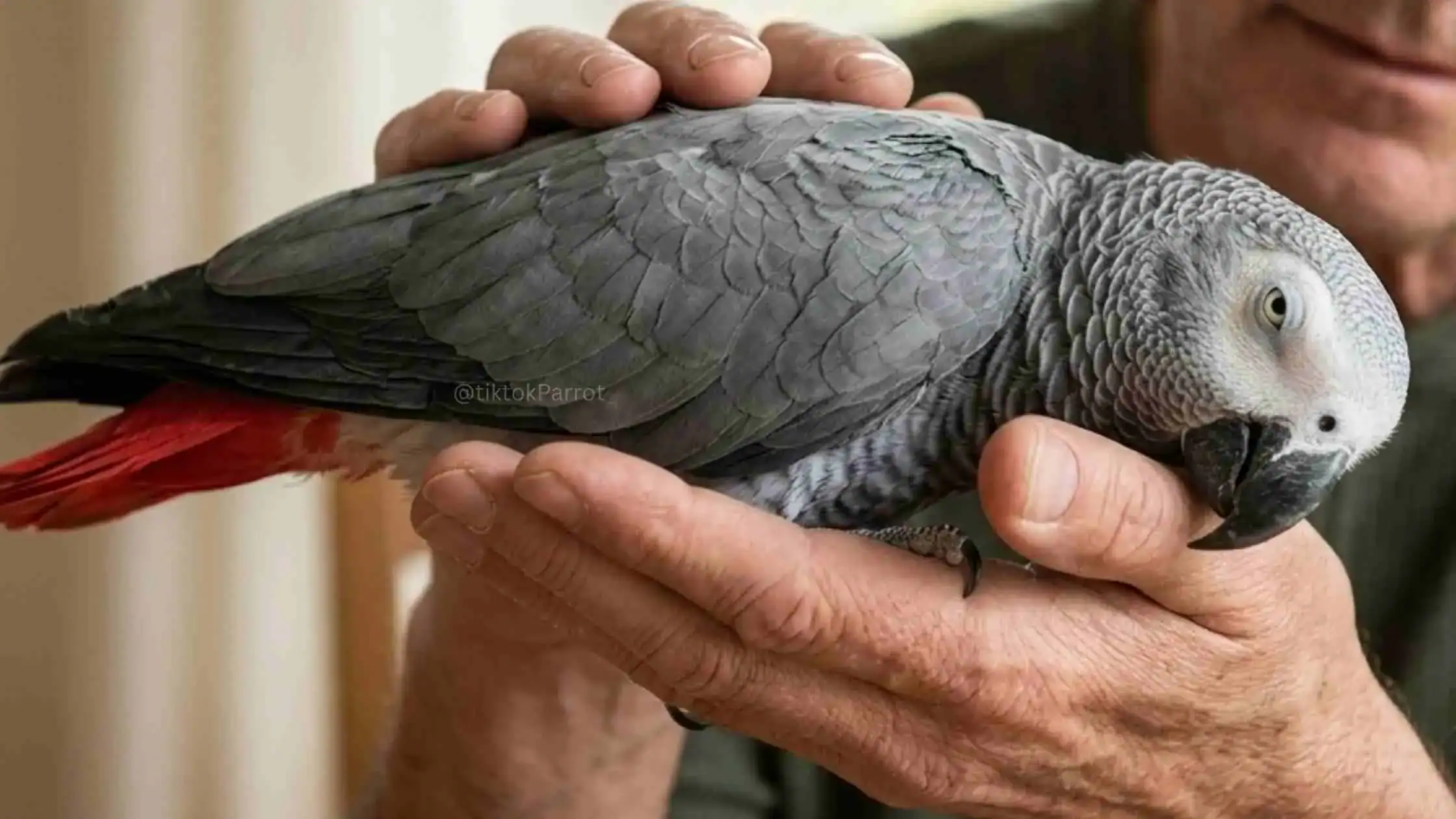
African Greys are widely regarded as one of the most cognitively advanced bird species on the planet, with problem-solving and reasoning skills that researchers have compared to a five-year-old child. Their emotional development, meanwhile, is often estimated closer to that of a two-year-old — old enough to form real attachment, seek comfort, and express distress, but without the impulse control of an older child or adult.
That combination matters. A Grey isn’t capable of an abstract, human concept of romantic-style “love,” but it absolutely is capable of forming a specific, selective, lasting attachment to the people in its life — one built on trust, familiarity, and repeated positive experience, in much the same way a young child bonds with a caregiver. Whether you call that love or something adjacent to it, the behavior looks strikingly similar.
They’re Still Wild at Heart — And That Changes Everything
Here’s the part that trips up a lot of new owners: even a bird that was hand-raised from hatching is, genetically and instinctively, still a wild animal. It doesn’t matter how gentle or affectionate your Grey becomes over time — the underlying instincts that shape a wild parrot’s caution, startle response, and self-protective behavior never fully switch off.
This is why a Grey might shriek at a sudden noise, flinch at a fast movement, or seem to “forget” weeks of progress after one startling incident. It’s not a personality flaw or a step backward in the relationship — it’s a wild animal’s nervous system doing exactly what it evolved to do. Understanding this reframes a lot of frustrating moments: your bird isn’t rejecting you, it’s reacting the way millions of years of evolution wired it to.
The Behavioral Signs Your African Grey Actually Loves You
Because Greys can’t say it outright (well — technically some can, but it’s not always sincere), affection shows up in behavior instead:
- Regurgitating food for you. This can look alarming the first time you see it, but in a healthy bird it’s one of the clearest signs of a real bond — it’s the same gesture bonded pairs use to feed each other in the wild.
- Seeking you out rather than avoiding you. A bird that chooses to approach, rather than merely tolerating your presence, is showing genuine preference.
- Relaxed body language in your presence — soft feathers, slow blinking (“eye pinning” in a relaxed context), and a loose, non-rigid posture.
- Vocalizing freely around you, including chatter, mimicry, or simply talking to itself while you’re nearby.
- Allopreening or soliciting head scratches, which mirrors the mutual grooming bonded pairs perform for each other in the wild.
If you want the fuller picture of what your bird’s posture and movement are telling you moment to moment, understanding Grey parrot body language breaks it down signal by signal.
The Core Principles Behind Every Loving Bond
There’s no shortcut to earning a Grey’s affection, but the process does follow a consistent set of principles:
Build the environment first. A calm, secure home base — a spacious cage in a quiet, low-traffic part of the house — gives your bird the sense of safety that everything else is built on. See things you need to know about an African Grey parrot’s cage for the details.
Feed the relationship, literally. A consistent, balanced diet isn’t just physical health — a bird that’s nutritionally struggling is rarely emotionally settled either. The hidden dangers of a poor diet for African Grey parrots explains why this connects more directly to behavior than most owners expect.
Show up consistently. African Greys thrive on routine, and a bird that can predict your schedule feels safer around you. One to three hours of genuine daily interaction is a reasonable target for most owners — more matters more than less.
Talk, even without a reply. In the wild, Greys are constantly vocal with their flock. Talking to your bird regularly — narrating your day, repeating simple phrases — signals that you’re a social partner worth paying attention to, long before your bird responds in kind.
Let trust lead, not force. Never push physical contact on a bird that’s pulling away. Respecting hesitation now builds far more trust than forcing a cuddle today.
Reward what you want to see more of. Positive reinforcement — treats, praise, calm affection — strengthens desired behavior far more reliably than correction ever will.
Play with purpose. Structured bonding activities do more than pass the time — they actively build trust through shared, positive experience. Bond-building games with your African Grey parrot is full of specific ideas to try.
Give it time — genuinely more than you’d expect. Depending on your bird’s history and personality, real trust can take anywhere from a few weeks to well over a year. How long does it take for an African Grey to trust you? lays out a realistic timeline so you’re not measuring your progress against the wrong expectations.
What Gets in the Way of a Loving Bond
A few common mistakes quietly slow this process down:
- Startling the bird with sudden movement, loud noise, or bright light — Greys have sharp memories and will associate you with the scare far longer than you’d expect.
- Skipping the eye contact and grip check before moving a bird on your hand or arm, which can trigger a fear response.
- Inconsistent handling across family members, which confuses a bird that relies on predictable patterns.
- Forcing affection on your timeline instead of the bird’s, which reliably backfires with a species this sensitive to pressure.
- Underestimating hormonal or seasonal shifts, which can temporarily affect even a well-bonded bird’s behavior.
Frequently Asked Questions
Can African Grey parrots really feel love for their owners?
They can form deep, selective, lasting attachments comparable in behavior to what we’d call love, even though the underlying cognitive experience isn’t identical to human romantic or familial love. The bond is real; the mechanism is uniquely avian.
How can I tell if my African Grey trusts me versus just tolerates me?
Tolerance looks like passive acceptance without engagement. Trust looks like your bird actively seeking you out, relaxing in your presence, vocalizing freely, and initiating contact rather than merely allowing it.
Why does my African Grey seem affectionate one day and distant the next?
This is normal and often tied to routine changes, hormonal cycles, or a recent startling event rather than a genuine shift in the relationship. Consistency on your end usually smooths this out over time.
Is it possible to lose an African Grey’s trust once you’ve earned it?
Yes, though it’s rarely permanent. A single frightening incident can set progress back temporarily, but with continued patience and consistency, most bonds recover.
Final Thoughts
Whether or not you want to call it “love” in the strictest sense, the bond an African Grey builds with the right person is real, hard-won, and remarkably deep — a genuine, ongoing relationship with an animal capable of remembering your kindness for decades. Give it the patience, consistency, and respect it deserves, and you’ll get back one of the most rewarding companionships available with any pet, feathered or otherwise.
If this blog post has helped you, please share it with your family and friends who might also find it helpful. If you love African Greys, join our community of Grey owners! You can meet other owners, share tips and learn from each other.
You might like to read these as well 🙂
Is Your African Grey a Jealous Bird? Here’s What You Need to Know!
African Grey Parrots: The Ultimate Guide to Care and Training
African Grey Parrot Male or Female? (Determine Gender of African Grey)
The Surprising Benefits of Owning an African Grey Parrot
Understanding of Grey Parrot’s Body Language
The Importance of a Cage for Your African Grey Parrot
Mastering the Art of Taming an African Grey Parrot
The Mesmerizing Eyes of African Grey Parrot & What They Can Tell
Unlock the Secrets of Choosing the Perfect African Grey Parrot
The Battle of the Birds: African Grey Parrot vs Macaw
The Battle of the Birds: African Grey Parrot vs Crows
Winning Parrot Names: How to Choose a Name That Strengthens Your Bond
The Secret Life of African Grey Parrots: What You Need to Know Before Owning One
The Mighty Beak: Exploring the Unique Features of African Grey Parrot Beak
Stay safe and much love!


Hey there! 🐾 Looking for top-notch pet supplies or anything on Amazon?
Support our site by shopping on Amazon through our this referral link, it will not cost you extra!
Your purchases on Amazon can help us continue providing valuable content.
Thank you for your support! 🛍️