Image a bird that can outlive you, out-argue a toddler, and hold a genuine, back-and-forth conversation about the color of your shirt. That’s not a thought experiment — it’s an average Tuesday with an African Grey parrot. Researchers have compared their reasoning skills to a five-year-old child, and if you’ve ever lived with one, you know that “impressive” barely covers it.
Whether you already share your home with a Grey, you’re researching before you adopt, or you just fell down a TikTok rabbit hole of talking parrots, these are the facts that actually explain why this species is so unlike any other pet bird on the planet.
Table of Contents
1. Their Intelligence Rivals a Toddler’s
African Greys are widely considered the most cognitively advanced parrot species on record. In controlled studies, they’ve identified, requested, refused, categorized, and quantified more than 80 different objects, and responded correctly to questions about color, shape, and material. Some researchers place their reasoning ability alongside dolphins and great apes — species we don’t usually put in the same sentence as “birdcage.”
This intelligence is a double-edged sword. A bored Grey doesn’t just sit quietly; it problem-solves, and sometimes that means learning to open its own cage latch or picking apart a toy to see how it works. If your bird’s behavior has started to look more like frustration than curiosity, it’s worth reading about how to tell if an African Grey is depressed, since boredom and low mood often show up in the same subtle signs.
2. They Build a Vocabulary of 1,000+ Words — and Use Them in Context
Mimicry gets a lot of attention, but the more remarkable trick is contextual use. African Greys don’t just repeat sounds; studies have shown they can apply learned words appropriately to new situations, essentially using language functionally rather than just parroting it back. Owners regularly report their birds asking unprompted questions or commenting on what’s happening in the room.
3. A Well-Cared-For Grey Can Outlive Its Owner
African Grey parrots typically live 50 to 60 years in captivity, with some individuals reaching 70 or 80. That lifespan is a serious commitment, not a footnote — it’s the reason so many Greys end up rehomed multiple times over their lives, which is traumatic for a species this emotionally attached to routine and familiar faces.
If you’ve recently adopted an older bird or aren’t sure how old yours actually is, this guide on how to tell the age of your African Grey parrot walks through the physical and behavioral clues.
4. They’re Monogamous — and Surprisingly Equal Co-Parents
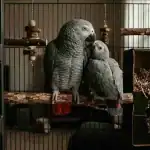
In the wild, African Greys form monogamous pairs that stay together across multiple breeding seasons, and both parents share nesting duties almost equally. That includes feeding, grooming, guarding, and socializing the chicks — a level of shared parental investment that’s unusual even among birds.
Curious whether your own pair is heading toward breeding behavior? Here’s how to recognize when your African Grey is ready to mate.
5. Egg-Laying Is Rare and Highly Seasonal
A female African Grey typically lays just one or two clutches per year, with each clutch containing three to five small white eggs. She incubates them for roughly 28 to 30 days, rarely leaving the nest, while her mate forages and brings back food. If you want the full picture of clutch size, incubation, and hatchling development, this complete guide to how many eggs an African Grey lays per year covers it in detail.
6. Chicks Stay With Their Parents Longer Than You’d Think
Even after fledging around 12 weeks, young African Greys typically remain dependent on their parents for guidance on foraging, flying, and vocal development for a while longer. This extended “childhood” is part of why Greys are considered so behaviorally complex — they’re not just physically maturing, they’re learning social and survival skills the way a mammal would. For a deeper look at this stage, see how long baby African Greys stay with their mother.
7. Their Signature Look Has a Purpose
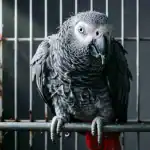
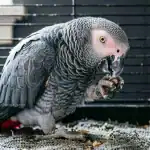
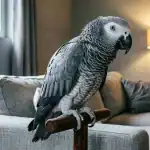
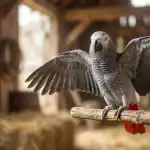
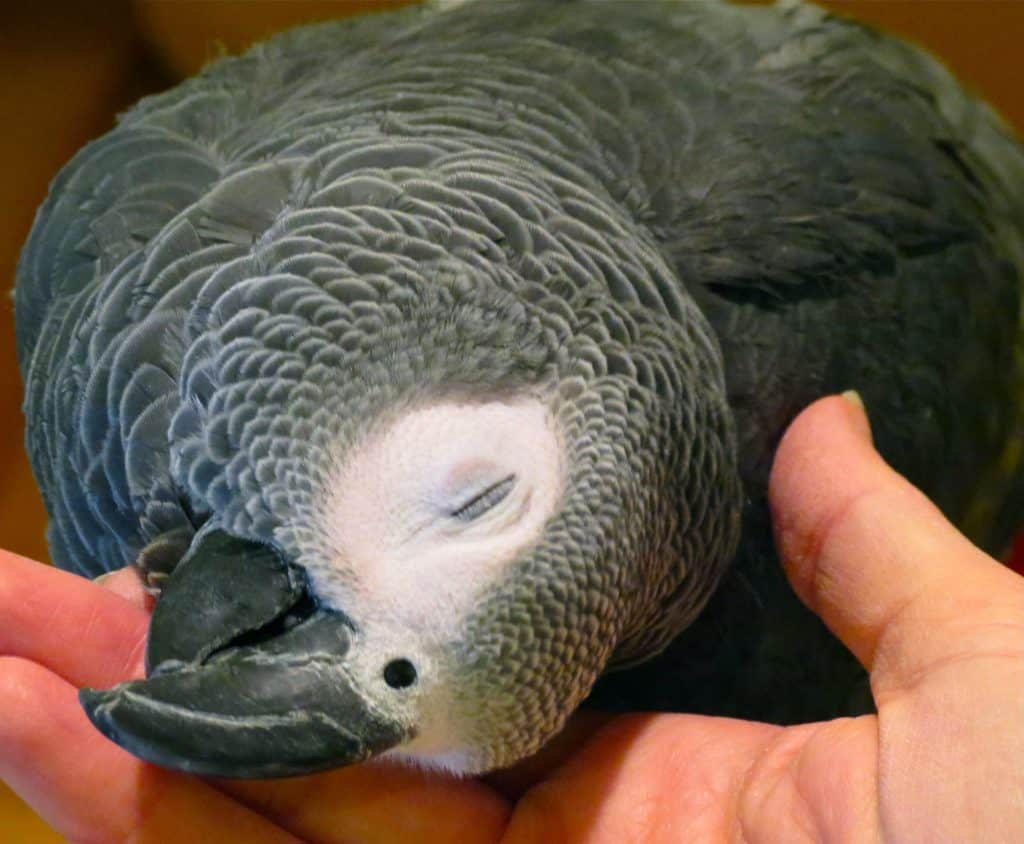
The African Grey is a medium-sized, mottled-grey parrot with a large black bill, a white mask around a pale yellow eye, and a vivid scarlet tail — the single most recognizable feature of the species. They weigh around 400 grams (14 oz) and measure roughly 33 cm (13 in) long. Males and females look nearly identical, though many owners find that males tend to develop slightly darker plumage with age.
8. They Nest in Stolen Tree Holes
Wild African Greys don’t build nests from scratch. Instead, they move into existing tree cavities — often ones abandoned by woodpeckers or other birds, and occasionally ones they take over outright. The enclosed space offers crucial protection from predators like monkeys and snakes, both of which target parrot eggs.
9. They’re Capable Fliers, But Prefer to Climb
In the rainforest canopy, African Greys can travel up to 10 kilometers a day, but a surprising amount of that movement happens using their beak and claws to climb rather than flying branch to branch. It’s a reminder that even a well-flighted pet Grey needs plenty of horizontal space to move, climb, and forage — not just a perch.
10. Boredom Is Their Biggest Behavioral Trigger
Because they’re so intelligent, African Greys need consistent mental stimulation, daily social interaction, and several hours outside the cage in a supervised, bird-proofed space. Without it, boredom tends to show up as loud vocalizing, destructive chewing, or, in some birds, chewing at their own nails or feathers. If you’ve noticed your bird gnawing at its nails more than usual, this article on why African Greys chew their nails breaks down the likely causes.
11. Nutrition Directly Affects Their Famous Intelligence and Bone Health
A wild African Grey’s diet includes fruit, seeds, buds, nectar, pollen, and the occasional insect — a far more varied menu than plain seed mix. Calcium in particular is chronically under-supplied in captive diets, which can lead to serious health issues over time. This guide to calcium-rich foods for African Grey parrots is worth bookmarking if you’re planning meals around bone and nerve health.
12. A Grey That Stops Drinking Water Is a Warning Sign
Because African Greys get some hydration from fresh produce, owners sometimes don’t notice when a bird has genuinely stopped drinking — until it becomes a health concern. If your bird’s water bowl hasn’t moved in a while, it’s worth reading why an African Grey might stop drinking water to rule out the more serious causes.
13. They’re Vulnerable to Specific Illnesses Owners Should Know
Two conditions worth understanding before they become emergencies: bacterial respiratory infections, which can progress quickly in a species with a delicate respiratory system, and Salmonella, which spreads through contaminated food, water, or surfaces. Learn the early symptoms in these guides on bacterial respiratory infections in African Grey parrots and symptoms of Salmonella in parrots.
14. Wild Populations Are Declining — and the Species Is Endangered
The IUCN currently lists the African Grey Parrot as Endangered, and the species is listed under CITES Appendix I, the strictest level of international trade protection. Habitat loss and historic capture for the pet trade have driven a real decline across their range in West and Central Africa, from southeastern Ivory Coast through the Congo Basin to parts of Uganda, Kenya, Tanzania, and Angola.
15. They Reach Sexual Maturity Surprisingly Late
Despite hatching relatively quickly, African Greys don’t reach sexual maturity until 3 to 5 years of age — sometimes later — with males and females maturing at roughly the same rate. It’s another sign of how much of their development mirrors long-lived, socially complex species rather than typical fast-breeding birds.
Frequently Asked Questions
How long do African Grey parrots live?
Most captive African Greys live 50 to 60 years, with some individuals reaching 70 to 80 years given proper diet, veterinary care, and mental stimulation.
Are African Grey parrots the smartest parrot species?
They’re generally considered among the most intelligent, with cognitive research comparing their problem-solving and language use to that of a young child.
How many eggs does an African Grey lay?
A female typically lays one to two clutches a year, with three to five eggs per clutch.
Is an African Grey parrot a good pet for beginners?
They can be rewarding companions, but their intelligence, long lifespan, and emotional sensitivity mean they’re generally better suited to owners who can commit significant daily time and, ideally, some prior bird-keeping experience.
Should You Get an African Grey Parrot?
If this list has done its job, you now know that an African Grey isn’t a “set it and forget it” pet — it’s closer to a decades-long relationship with a genuinely intelligent, emotionally complex animal. That’s exactly why adoption is worth considering before buying: thousands of Greys are surrendered every year, often after owners underestimated the time, noise, and attention this species needs, and a rehomed bird deserves the same patient, informed care as a hand-raised chick.
If you’re serious about bringing a Grey into your life — or you already have one and want to get it right — explore more of our guides on African Grey health, diet, and behavior to keep your feathered companion happy for the long haul.
Adopt a pet, post those pictures and let the well-earned likes roll in. Same as me 🙂
If this blog post has helped you, please share it with your family and friends who might also find it helpful. If you love African Greys, join our community of Grey owners! You can meet other owners, share tips and learn from each other.
You might like to check this out as well:
Types of African Grey Parrots
African Grey Parrot Price & Owning Cost
The Surprising Benefits of Owning an African Grey Parrot
African Grey Parrots as Pets, The Pros and Cons of Owning One
What To Do If Your Parrot Is Choking, something stuck in the throat?
Are African Grey Parrots Smarter Than Dogs?
Stay safe and much love!


Hey there! 🐾 Looking for top-notch pet supplies or anything on Amazon?
Support our site by shopping on Amazon through our this referral link, it will not cost you extra!
Your purchases on Amazon can help us continue providing valuable content.
Thank you for your support! 🛍️